
Land wars
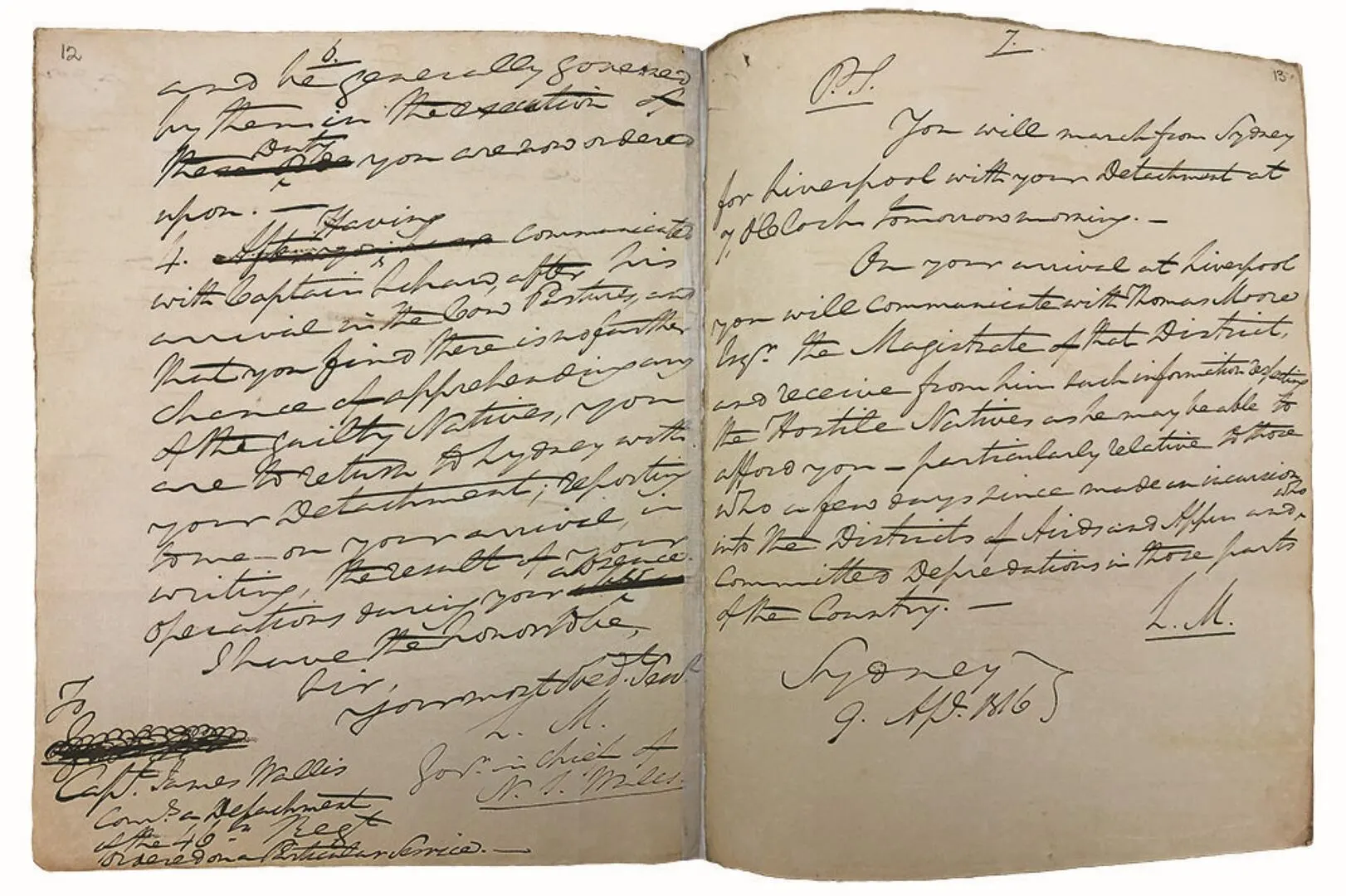
Appin massacre: Governor Lachlan Macquarie's Instructions to 46th Regiment Commanders, 9 April 1816 NSW State Archives and Records
Selected transcript of above
You will march from Sydney to Liverpool with your detachment at 7 o’clock tomorrow morning. On your arrival at Liverpool you will communicate with the Magistrate of that district and receive from him such information [pertaining] the Hostile Natives as he may be able to afford you - particularly relative to those who a few days since made incursions into the Districts of Airds and Appin and who committed Depredations in those parts of the country.
As Europeans took more land, attacks and raids on settlers’ farms by Aboriginal People increased. Aboriginal People used their knowledge of Blue Mountains terrain to hide out and for tactical attacks. One example was Razorback Ridge, a strategic location high in the hills that became an area of ongoing conflict between Europeans and Aboriginal warriors.
The land wars led to severe reprisals, the most infamous being the Appin massacre on 17 April 1816. Governor Lachlan Macquarie ordered Captain James Wallis to lead a military campaign, the largest in the history of the colony, through the west and south west of the Cumberland Plain. At least 14 Aboriginal men, women and children died when they were shot at and driven over the gorge of the Cataract River.
Aboriginal People continued to fight back but increased military raids continued until Macquarie declared in November 1816 that hostilities had ceased.
The Appin Massacre is said to mark a turning point in how the law dealt with Aboriginal peoples. The resulting Government Proclamation sought to establish regulations to control Aboriginal people, restricting their movements and large gatherings, and what they were allowed to carry on their person. The Proclamation foreshadowed later protectionist policies.
Sources: Australian Museum, Dictionary of Sydney, ‘Land Wars’ by Stephen Gapps.
- 4 Church St, Rooty Hill NSW 2766
- Call us (02) 9748 9800
- Get directions via Google
