
Pye family and cooperation with Aboriginal People
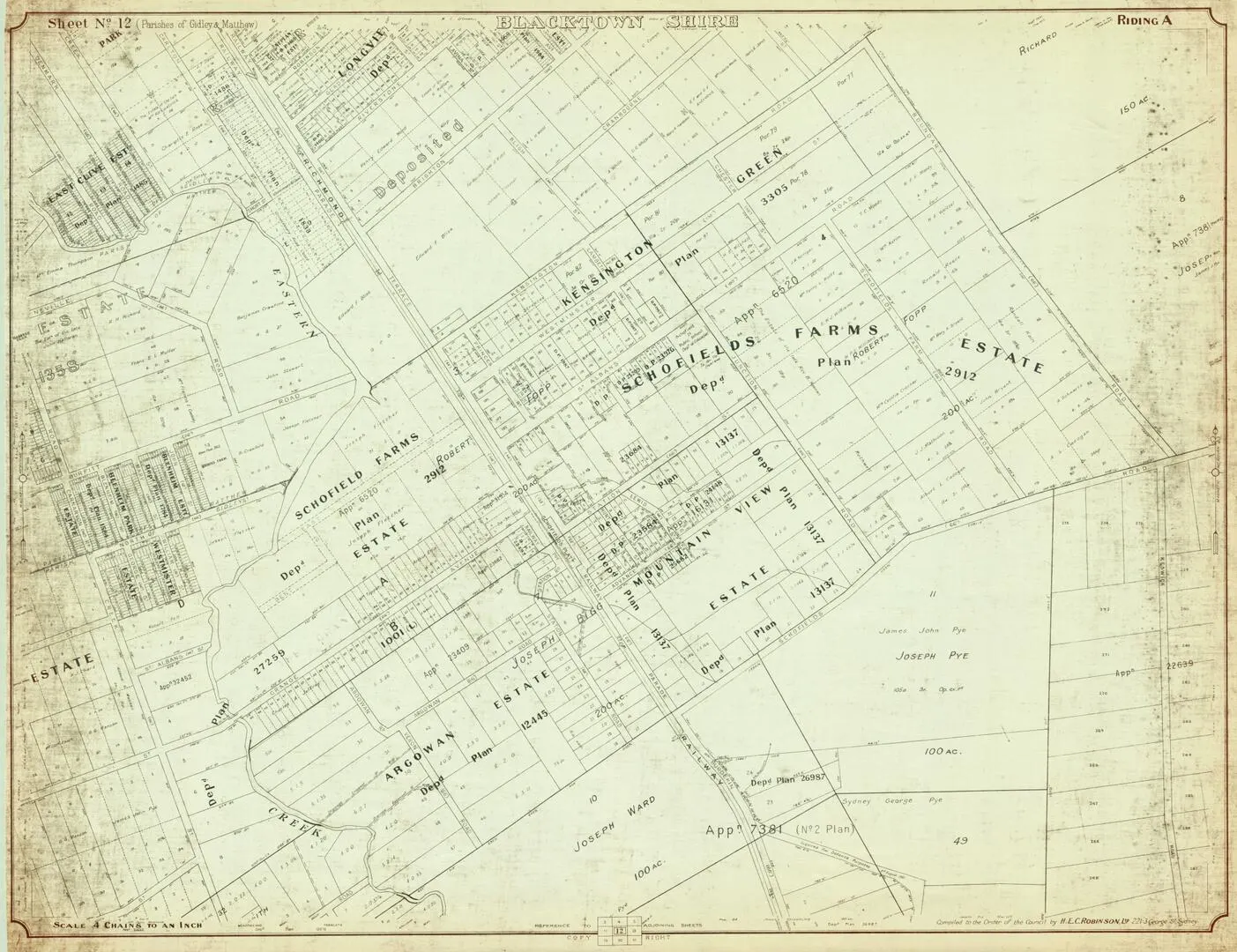
On 8 October 1816, John Pye (1769-1830) received a grant of 85 acres in the District of Bathurst, bordering Eastern Creek. His eldest son, Joseph Pye (1796-1853), also received a grant of 85 acres immediately to the south on the same date.
By 1817 Joseph Pye was living at his farm at Eastern Creek. His wife, Elizabeth, likely also lived with him. Their first son, Joseph, was born in 1819. Most of the property was used for grazing sheep and cattle, but small areas (around 10 acres each) were planted with wheat and maize, the two main cereal crops grown by colonists on the Cumberland Plain at the time.
By 1832 Joseph Pye owned and managed a large quantity of lands either side of Eastern Creek. Over the next 16 years he gradually purchased neighbouring farms, building up an estate of 1587 acres, turning a small farm into the centre of a moderately large Cumberland Plain estate. The relationship between the Pye family and local Aboriginal people has not been recorded in diaries, journals, or books. There are a few scant pieces of information available, and some tantalising clues that these two groups interacted regularly. From this we understand that Pye was familiar to Aboriginal people in the area and allowed them access onto and across his lands.
Johnny Warrawanny, Betty Cox, their family and potentially others, had a cordial and collaborative relationship with the Pye family. Although we do not know the nature of the relationship, we can infer that these Aboriginal people could enter and access the spaces around the homestead long enough to select and remove glass and ceramics.
In 1821, the Sydney Gazette reported that two calves had been killed by eagle hawks on Pye’s farm:
“The report shows how the settlers initially wanted to blame fellow settlers, and then ‘native dogs’ (ie dingos) for the deaths of the two calves, until local Aboriginal people offered another explanation. The exchange demonstrates that during the early nineteenth century settlers and Aboriginal people could exchange information about the landscape. It also suggests that Joseph Pye or his assigned convicts were on occasion willing to listen to local Aboriginal people when they offered information. We understand from some historical records that local Aboriginal people worked on Pye’s farm and were able to stay for extended periods on the land.”
The Pye family might have known this was a traditional or favoured location because of the repeated return of Aboriginal people to this place.
DHARUG NURA Blacktown Native Institution Conservation Management Plan 2024
- 4 Church St, Rooty Hill NSW 2766
- Call us (02) 9748 9800
- Get directions via Google
